
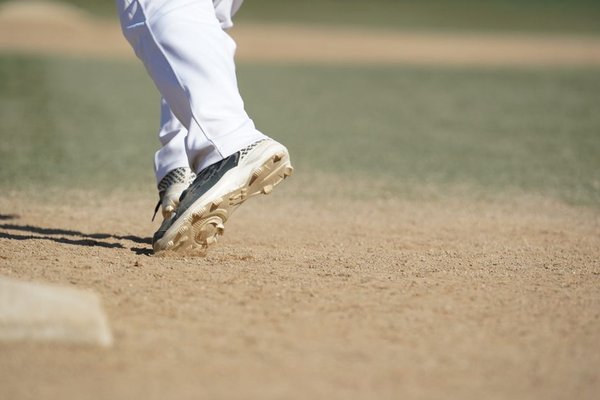
The biggest difference between baseball cleats is not the logo or the amount of cushioning. It is how the outsole meets the ground. A shoe that feels secure on a dry dirt infield can feel awkward on artificial turf, while a comfortable turf shoe may not provide enough bite on a soft natural field. Choosing well starts with matching traction, fit, and league rules to the surfaces you actually play on.
This baseball cleats guide focuses on those practical differences. Metal, moulded, and turf options each solve a different traction problem, so none is automatically best in every situation.
The Main Baseball Cleats Types
Metal cleats
Metal cleats use thin metal spikes that penetrate dirt and natural grass more deeply than most plastic studs. That sharper contact can provide excellent grip when accelerating, stopping, rounding a base, or planting for a throw. Many experienced players like the connected feel on well-maintained natural fields because the spikes bite into the surface rather than simply pressing against it.
The trade-off is that metal spikes are less forgiving on hard ground and are unsuitable for many synthetic surfaces. They can also be restricted by age group or league. Little League, for example, does not permit metal spikes in its Majors division and below, while they are permitted in its Intermediate 50/70, Junior, and Senior divisions. Always check the current league and facility rules before buying.
Moulded cleats
Moulded cleats use permanently attached rubber or TPU studs. The studs are usually wider and less sharp than metal spikes, so they do not penetrate the ground as aggressively. For many players, that makes moulded models a useful middle ground: dependable traction on dirt and grass, good durability, and broad acceptance in youth baseball.
In a metal vs moulded cleats comparison, metal generally offers more aggressive penetration on suitable natural fields, while moulded cleats often provide greater versatility. A player who practices on several community fields with different dirt conditions may prefer moulded studs because they deliver reliable grip without the sharper feel of metal underfoot.
Turf baseball shoes
Turf shoes replace long cleats with many small rubber lugs or a textured rubber outsole. Instead of digging deeply, they spread grip across artificial turf. That makes turf baseball shoes especially useful on synthetic diamonds, indoor training areas, batting cages, and hard practice surfaces where traditional spikes may be unnecessary or prohibited.
Match the Shoe to the Playing Surface
Surface should be one of the first filters in any cleat decision. On natural grass and dirt, deeper studs can create the traction needed for explosive starts and controlled stops. On artificial turf, a lower-profile rubber outsole is usually the more natural match because it grips without digging too deeply into the surface.
Field condition matters too. A dry, compacted infield can feel much harder underfoot than a softer field after rain. Aggressive spikes may feel harsh on very firm ground, while shallow traction can struggle when the surface becomes loose. Players who regularly move between natural and synthetic fields may get more value from owning two pairs rather than forcing one shoe to handle every environment.
Fit Matters as Much as Traction
A cleat can have the right outsole and still be the wrong shoe if the foot slides inside it. Baseball involves short sprints, lateral movement, sudden stops, and repeated planting, so excessive movement can create hot spots and reduce confidence.
A good fit should hold the heel securely, feel snug through the midfoot, and leave enough room for the toes to sit naturally without being crushed. Try cleats with game socks and test them while standing, walking, making controlled lateral movements, and rising onto the toes.
Players with wider feet should pay particular attention to pressure across the forefoot. Sizing up only to gain width can create extra length and heel movement, so a true wide-fit model may work better than a longer standard-width shoe.
Comfort, Position, and Playing Style
Position can influence priorities, although it should not override surface and fit. An infielder may value a locked-in feel for rapid starts and lateral reactions. An outfielder covering more ground may notice cushioning and overall comfort more during a long game. Catchers may prefer a stable base that does not create pressure points while spending time in a low stance.
A lighter shoe can feel quick, but a slightly more structured upper may provide better containment. The best baseball footwear is the pair that stays stable during baseball movements.
A Practical Two-Surface Example
Imagine a player who practices three days a week on artificial turf but plays weekend games on a natural dirt-and-grass field. Buying only metal cleats may leave that player without suitable footwear for most practices. Buying only turf shoes may sacrifice traction during games on softer natural ground. A turf pair for training plus a game-legal moulded or metal pair for natural fields is often a more practical setup.
For younger players, use the same order: confirm what the league permits, then match the legal options to the fields used most often. That prevents spending money on cleats that cannot be worn in competition.
How to Choose Between Metal, Moulded, and Turf
Choose metal cleats when your league permits them, you play mainly on natural dirt and grass, and you want aggressive traction. Choose moulded cleats when you want a versatile natural-field option, especially for youth play or mixed field conditions. Choose turf shoes when most of your baseball takes place on artificial turf, in cages, or on hard training surfaces.
Whatever the outsole, inspect the shoe periodically. Worn studs, separating soles, compressed cushioning, or a loose heel can change how the shoe performs even if it still looks usable at a glance.
Frequently Asked Questions
Are metal cleats better than moulded cleats?
Not in every situation. Metal cleats can provide stronger penetration on suitable natural fields, while moulded cleats are often more versatile and may be allowed where metal spikes are restricted.
Can you wear baseball cleats on artificial turf?
It depends on the facility and the cleat type. Many artificial-turf fields are better suited to turf shoes or approved moulded patterns, while metal spikes may be prohibited. Follow the facility’s footwear policy.
How tight should baseball cleats fit?
They should feel secure at the heel and midfoot without painful pressure. The toes need enough room to rest naturally, but the foot should not slide forward during stops or direction changes.
Do new baseball cleats need to be broken in?
A short adjustment period is normal, but new cleats should not cause sharp pressure or significant pain. Wearing them for brief practice sessions before a game can reveal fit problems early.
Choosing the Right Baseball Footwear
The most useful way to compare baseball cleats is to start from the ground up. Identify the surface, confirm league rules, decide how much traction you need, and then judge fit and comfort. Metal, moulded, and turf options are designed to interact with the field in different ways. Match the outsole to where you play, and the rest of the decision becomes much easier.